 Teka

Dishwasher sizes and plumbing for a UAE kitchen
Most dishwasher problems are decided before the machine is bought: the width of the gap, the height under the worktop, where the drain can reach and where the socket sits. A 60cm model needs a 60cm opening plus room for the door, the hoses and the cable. A 45cm model fits a tighter run but holds fewer place settings. Confirm those four things before comparing programmes.
The measurements that decide the fit
A dishwasher needs three dimensions to agree: the width of the opening between the cabinets, the height from the floor to the underside of the worktop, and the depth available behind the door line. A fourth matters just as much on the day: the clearance for the open door, because a machine that opens into a walkway or against another unit is awkward to load every day.
Height is where most surprises come from. Worktops are set at different heights, floors are not always level, and many machines adjust only across a small range through their feet. Measure the actual opening in your kitchen rather than the standard figure on a specification sheet, and measure it in more than one place, because a floor that falls by a centimetre changes what will slide in.
- Width: the clear gap between the cabinet sides, not the cabinet centres.
- Height: floor to the underside of the worktop, measured at the front and the back.
- Depth: from the front of the cabinet line to the wall, leaving room for the hoses and the cable.
- Door swing: the space the open door needs, and what it will hit.
45cm or 60cm
A 60cm dishwasher is the standard width and holds the larger basket layout, which matters if you cook at home often or have a family. A 45cm model is narrower and holds fewer place settings, but it fits a short run of cabinetry or a smaller apartment where a 60cm gap simply does not exist.
Place setting counts on the box are a rough guide rather than a promise. What decides whether a machine suits you is the basket layout: whether the upper basket adjusts in height, whether tall glasses and a stock pot can go in at the same time, and whether the cutlery sits in a tray or a basket. If you regularly wash large trays or chopping boards, check the usable internal height rather than the headline capacity.
Replacing a 60cm machine with a 45cm one leaves a gap that has to be closed with a filler panel or a cabinet change, so compare the two only after checking what the opening will accept.
Built-in, semi-integrated and freestanding
A fully integrated dishwasher takes a furniture door on its front, so it disappears into the kitchen run. That door is fixed to the appliance with a sliding hinge or a fixed hinge depending on the model, and the two are not interchangeable. Confirm which system the machine uses and whether your cabinet door can be adapted, because this is the detail that stops an installation on the day.
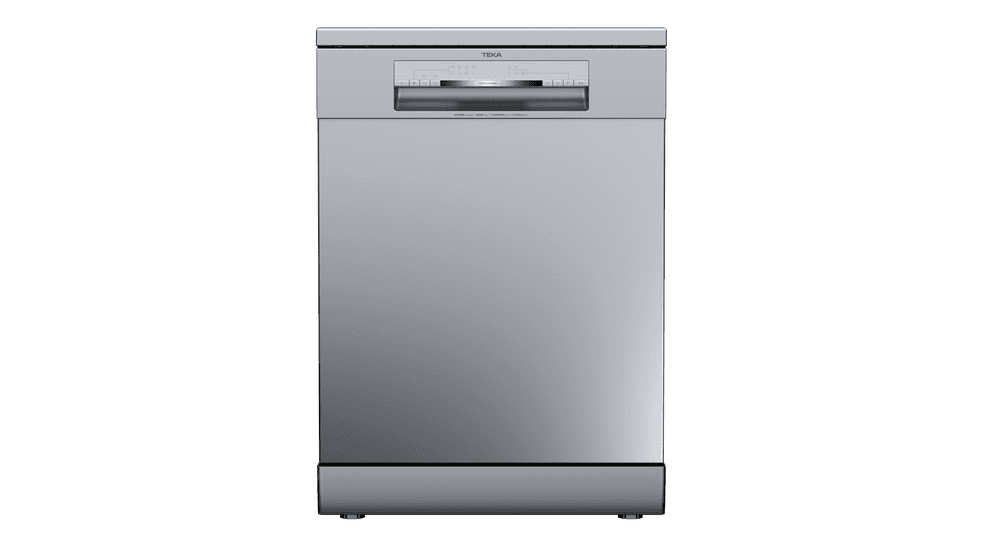
A semi-integrated model keeps a visible control panel at the top of the door, which some people prefer, and still accepts a furniture door below it. A freestanding dishwasher has its own finished front and needs clearance at the sides as well as the back; it is the simplest to place but the hardest to make disappear.
In all three cases the plinth matters. The machine has to sit behind or above the kitchen plinth line, and the plinth may need a cut-out. Confirm that before the cabinetry is finished rather than after.
Plumbing: inlet, drain and the loop
A dishwasher fills from the cold supply. It needs a connection to a cold water pipe with an isolation valve you can reach, usually under the adjacent sink. The inlet hose has a limited length, so the machine has to sit within reach of that valve without straining the hose.
The drain is where most installations go wrong. The drain hose normally discharges into a standpipe or a spigot on the sink trap, and it needs a high loop or an air break so dirty water cannot siphon back into the machine. Check the manual for the required loop height and the maximum drain length, and keep the hose run as short and as straight as the layout allows.
Do not trap the hoses behind the machine. If the appliance is pushed back against a wall of hose, the run kinks, the drain slows and the machine eventually reports a drain fault. Leave a service gap, and check that the isolation valve can still be reached once the machine is in place.
- Cold inlet with a reachable isolation valve.
- Drain hose into a standpipe or trap spigot, with the loop at the height the manual specifies.
- No kinks, no stretched hoses, no connections hidden behind the machine.
- A service gap at the back for the hoses and the cable.
Where the socket belongs
The socket should be in the cabinet beside the dishwasher, not directly behind it. A plug behind the machine adds depth you may not have and makes the appliance impossible to isolate without pulling it out.
Dishwashers are wet appliances, so the circuit should be protected as your electrician specifies for the kitchen. Avoid extension leads and multi-socket strips for a fixed appliance; if the existing socket is in the wrong place, moving it is an electrical job to arrange before delivery, not on installation day.
Water hardness, salt and cloudy glasses
Water hardness varies across the UAE and even between buildings, so a setting that works in one apartment is not automatically right in another. Most machines have an adjustable salt setting that should be matched to the local hardness, and using the wrong setting is a common reason glasses come out cloudy or chalky over time.
Rinse aid does the drying work. If dishes stay wet, check the rinse aid level before assuming the machine is faulty. In hard water areas, keep the salt topped up and clean the filter regularly, because grease and scale together are what make a dishwasher smell.
Noise, and where the machine sits
Noise figures matter most in an open-plan kitchen or a small apartment where the machine runs while people are in the room. A lower decibel rating is worth paying attention to if the kitchen opens onto a living area, and a night or delay programme helps if your building has quiet hours.
Vibration is a separate issue from noise. A machine on an uneven floor will walk and rattle whatever its rating, so check that the feet can be adjusted to sit flat and that the machine is level before it is built in.
What to measure before you order
Work through this list once, with a tape measure, before you choose a model. It takes ten minutes and it prevents the most common reason a dishwasher has to go back.
- The clear width between the cabinets at the floor and at worktop height.
- The height from the floor to the underside of the worktop, front and back.
- The depth from the cabinet line to the wall, allowing for hoses.
- The distance to the cold water valve and to the drain connection.
- Where the socket is, and whether it can be reached with the machine installed.
- Whether the door will open freely, and what it opens against.
Delivery, installation and warranty
KitchenByPro supplies the appliance; connection and installation are carried out by the brand's authorised service centre or by your own fitter, and the service centre may charge for the visit. When a product page states installation requirements for a model, those are the brand's requirements, so read them before the cabinetry is finished.
Warranty is the applicable brand or manufacturer warranty, and its terms differ by brand and model. Keep the delivery note, because a claim normally starts from the purchase and delivery record.
Built-in Dishwashers in the catalogue
30 products match this guide's recommendation, 17 of them in stock today. Showing 8, in-stock first.
Teka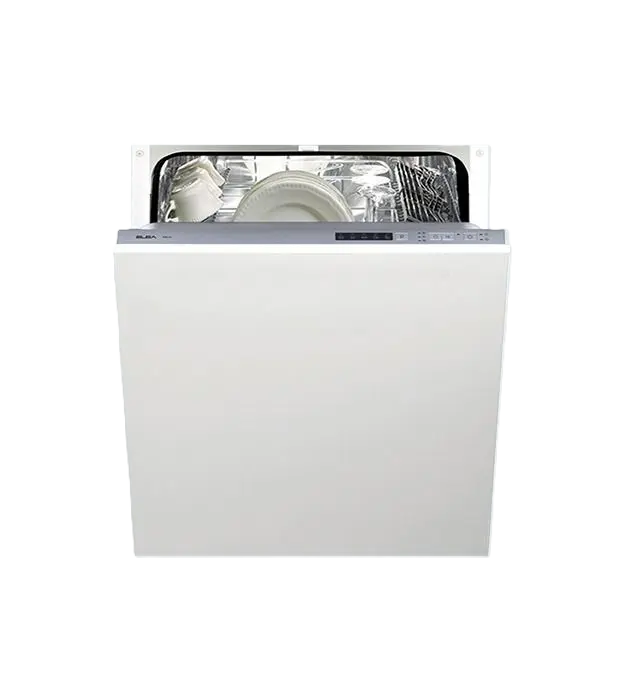 Elba
Elba IDW 129 Built-In Dishwasher 15 Place Settings
AED 3,003● In stockSelect options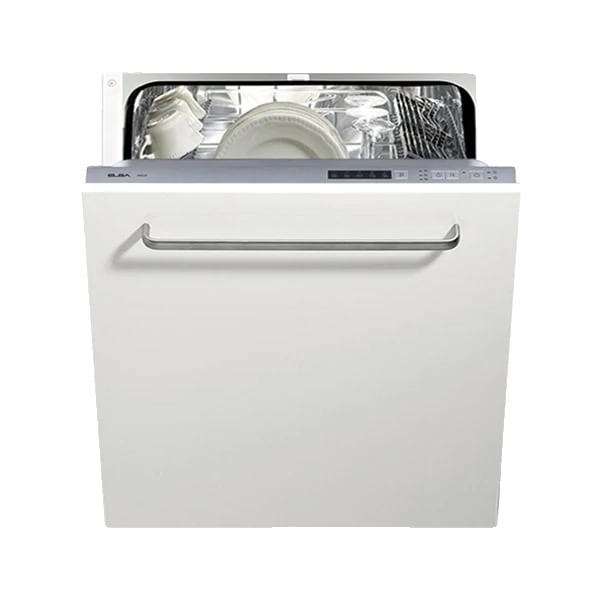 Elba
Elba IDW 120 Built-In Dishwasher 12 Place Settings
AED 2,368● In stockSelect options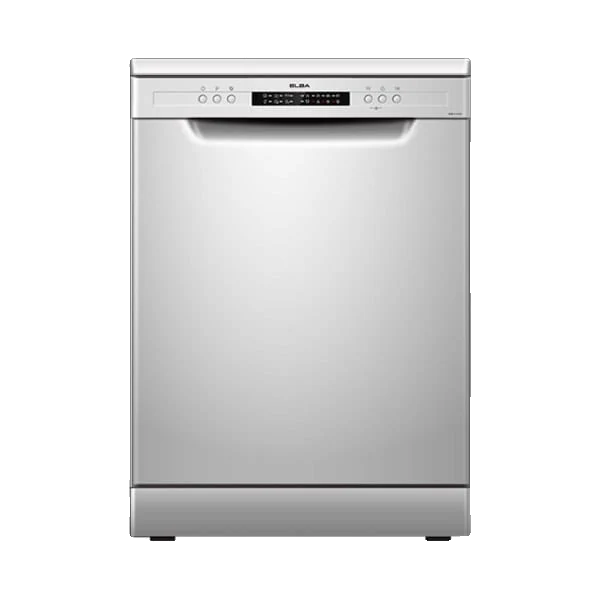 Elba
Elba FDW 154SS Freestanding Dishwasher 14 Place Settings
AED 2,368● In stockSelect options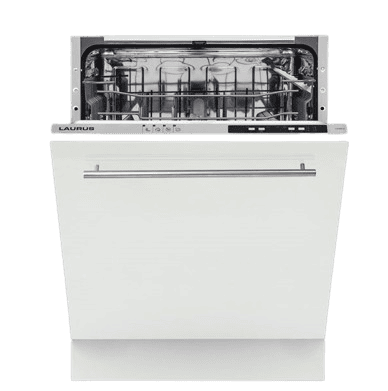 CM Appliances
CM ZDT-D22 BUILT-IN FULLY INTEGRATED DISHWASHER 60CM
AED 2,425.5● In stockSelect options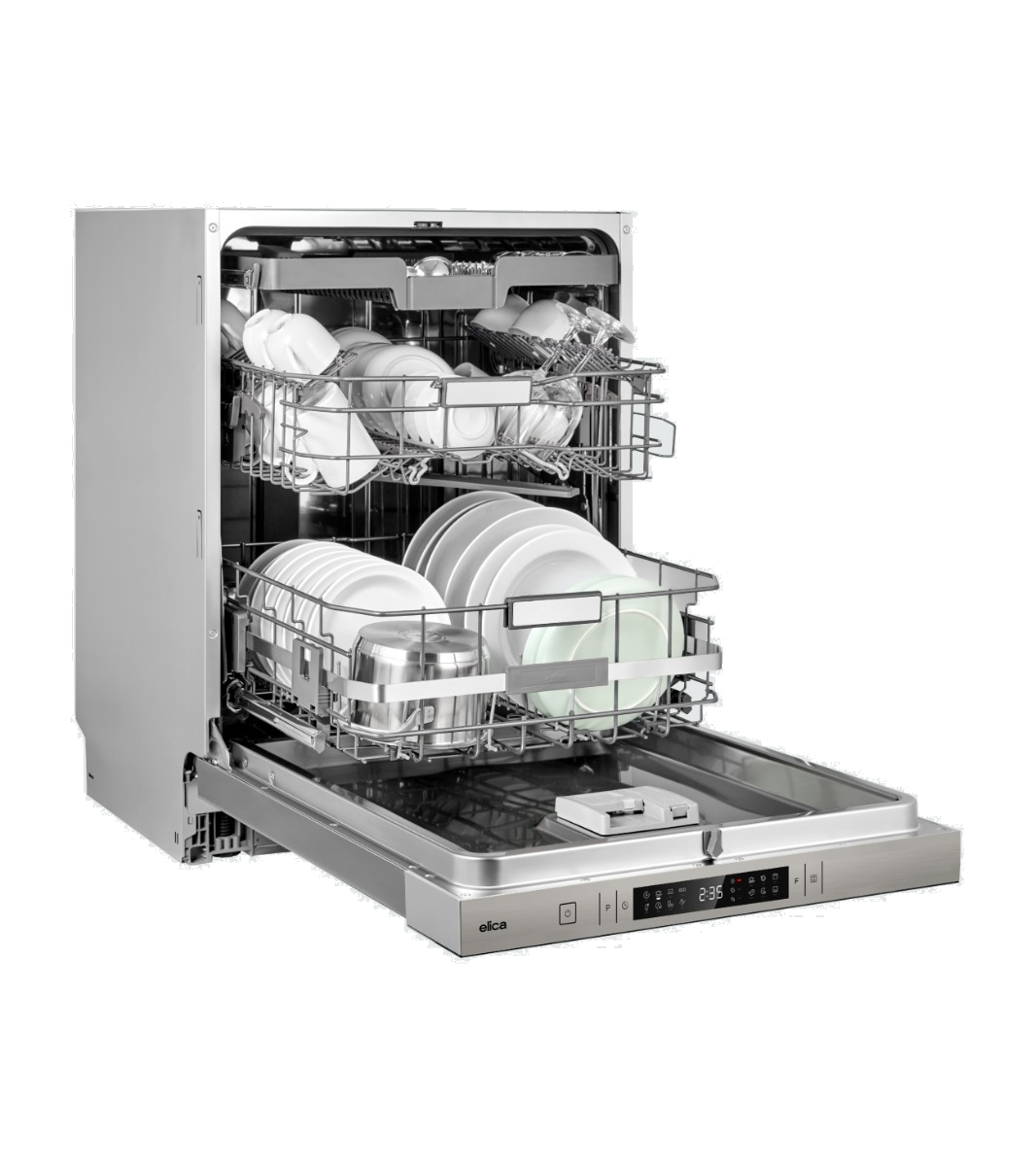 Elica
Elica FBI LED Comfort 14 Built-In Dishwasher 14 Place Settings
AED 4,909● In stockSelect options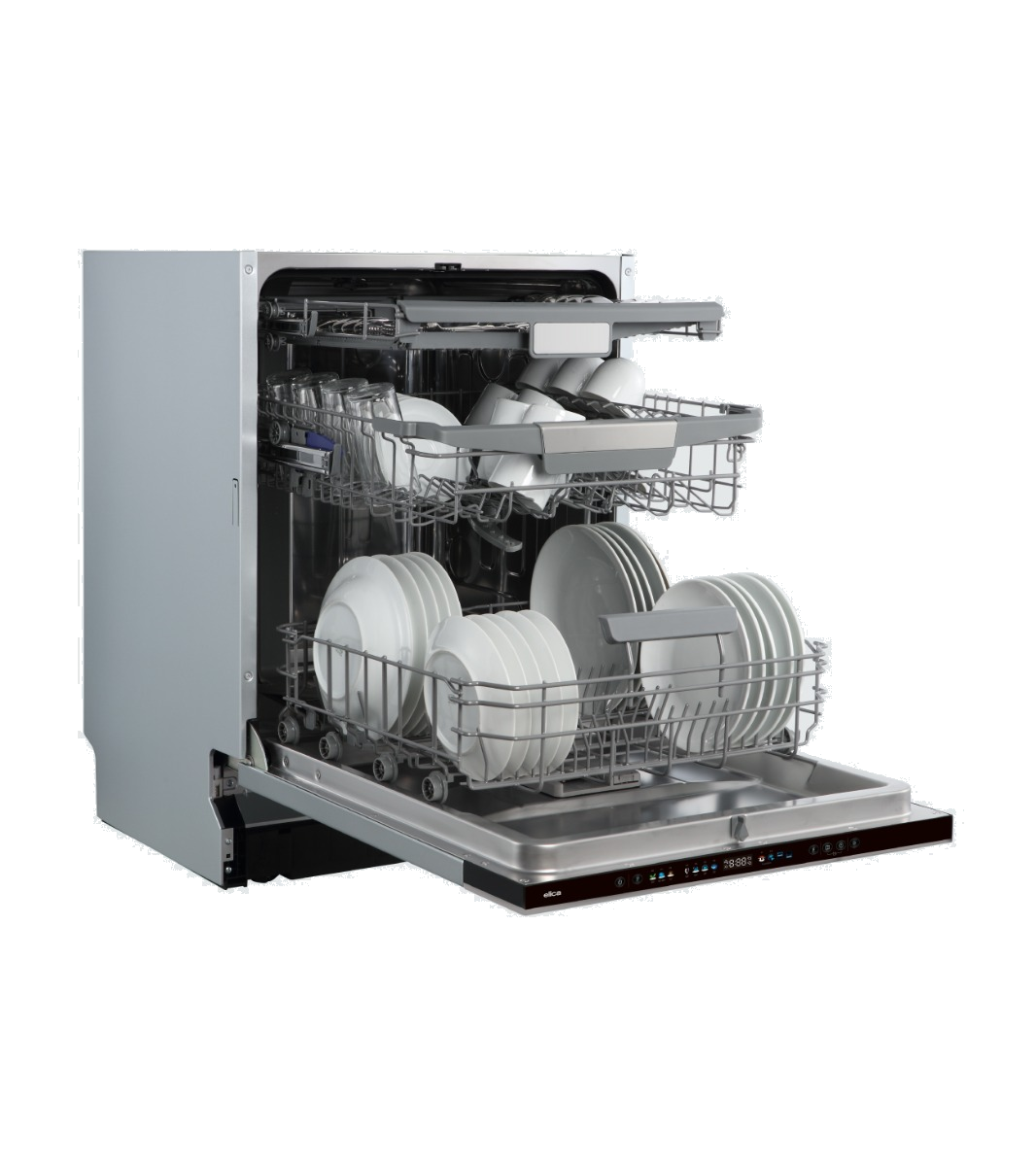 Elica
Elica FBI TOUCH LED 14 Built-In Dishwasher 60 cm
AED 3,292● In stockSelect options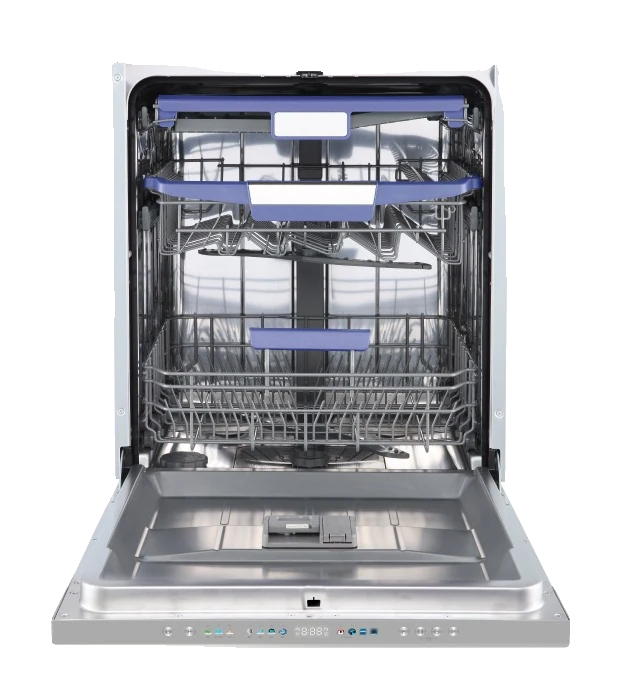 Elba
Elba IDW745 Built-In Dishwasher 10 Place Settings
AED 2,252● In stockSelect optionsSee the full selection on Built-in Dishwashers or browse Built-in Dishwashers.
Dishwasher sizes and plumbing for a UAE kitchen: common questions
Can a 45cm dishwasher replace a 60cm one?
It can, but the 15cm gap left in the run has to be closed with a filler panel or a cabinet change, and the plinth and worktop still have to line up. Measure the opening and confirm the finishing detail before ordering.
Does a dishwasher need a hot water supply?
No. Domestic dishwashers fill from the cold supply and heat the water themselves, so the connection you need is a cold inlet with a reachable isolation valve.
Where should the drain hose go?
Normally into a standpipe or a spigot on the sink trap, with a high loop or air break at the height the manufacturer specifies. Check the manual for the loop height and the maximum drain length for your model.
Can the socket be behind the dishwasher?
It is better not to. A socket behind the machine adds depth, and you cannot isolate the appliance without pulling it out. Place it in the adjacent cabinet where it stays reachable.
Is hard water a problem for dishwashers in the UAE?
Hardness varies by area and by building. Most machines have an adjustable salt setting that should be matched to the local water, and rinse aid does the drying. Cloudy glasses usually point to the salt setting rather than a fault.